
Helen Burgos-Ellis
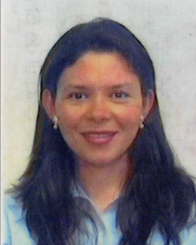
Helen Burgos-Ellis
Continuing Lecturer
Lecturers
Office: 7276 Bunche Hall
Email: helene@ucla.edu
Biography
Helen Burgos-Ellis, a native of El Salvador, trained as an art historian. Her research interests include pre-Columbian and colonial art, Nahuatl, Maya epigraphy, Amerindians (pre-Columbian to modern), maize domestication, history of science, interaction between art and science, and early modern Europe.
Her upcoming book Aztec Science: The Origin of Maize, Pollination & Plant Sexuality Recorded in Art introduces a radical approach to the study of pre-Columbian art. It brings science to Mesoamerican studies because this approach elucidates messages in pre-Columbian art that have puzzled generations of scholars. With evidence from ethnohistory, iconography, etymology, and science, this book argues that the Nahua: recorded the maize plant’s life cycle, knew that maize has male and female flowers and reproduces sexually, recognized wind’s role in pollination, and revered a grass because they knew it was maize’s progenitor. To develop the ideas in this book, she conducted archival, museum, and field research in indigenous communities in Mexico thanks to a Fulbright-Hays/IIE Fellowship 2011–12 generously funded by the Mellon Foundation.
Burgos-Ellis is active in community service. She served (2015–20) in the Executive Committee as Secretary Treasurer for the Association for Latin American Art (ALAA), https://associationlatinamericanart.org/about-us/. Burgos-Ellis currently collaborates with the Social Justice and Community Partnerships at Marlborough School for Girls, https://www.marlborough.org/student-life/service-learning-social-justice and the Wayuu Taya Foundation, which helps to improve the lives of indigenous peoples in Latin America, http://www.wayuutaya.org. Via UCLA ONE https://uclaone.com/, Burgos-Ellis also mentors undergraduate and graduate students.
Research
- Pre-Contact Art and Architecture
- Colonial Art of Latin America
- Interactions Between Art and Science
- Indigenous Peoples Scientific Breakthroughs
- Indigenous Peoples of the Americas from ancient to modern
- Maize Domestication
- Nahuatl
- Maya epigraphy
Selected Publications
- Aztec Science: The Genetic Origin of Maize, Pollination, and Plant Sexuality Recorded in Art. Boulder, CO: University Press of Colorado, August 15, 2026. https://upcolorado.com/university-press-of-colorado/aztec-science
- “Pollen: The Sexual Life of Plants in Mesoamerica,” in Natural Things: Ecologies of Knowledge in the Early Modern World, edited by McKenzie Cooley, Anna Toledano, and Duygu Yildirium, 23–52. London: Routledge, 2023. https://www.taylorfrancis.com/chapters/edit/10.4324/9781003351054-4/pollen-helen-burgos-ellis
- “Innocents Abroad? Representations of Aztecs Traveling in Europe in the Age of Exploration,” in Tornaviaje: Tránsito artístico entre los virreinatos americanos y la metrópolis, edited by Fernando Quiles, Pablo F. Amador, and Martha Fernández (Seville, Spain: Universo Barroco Iberoamericano), 2020. https://dialnet.unirioja.es/servlet/libro?codigo=767192
- “The Codex Mexicanus: A Guide to Life in Late Sixteenth-Century New Spain, Lori Bornazian Diel. Austin: University of Texas Press, 2018,” in Latin American and Latinx Visual Culture 1, no. 4 (2019). https://online.ucpress.edu/lalvc/article-abstract/1/4/123/109191
- “Codex Borgia,” in Smarthistory, 2017: https://smarthistory.org/codex-borgia/; and Khan Academy: https://www.khanacademy.org/humanities/art-americas/early-cultures/aztec-mexica/a/codex-borgia
- “Did the Aztecs use Sulfuric Acid? The Evidence Provided by the Six Burned Pages of the Pre-Columbian Codex Borgia” in La Historia del Arte en diálogo con otras disciplinas. IX Jornadas de Historia del Arte, edited by Raquel Abella, Angela Brandão, and Fernando Guzmán, 68–76. Museo Histórico Nacional, Ministerio de Educación de Chile, 2016. https://escholarship.org/content/qt7n5805p9/qt7n5805p9_noSplash_f5ffd2dc7c59be3bbb3826750b973f4c.pdf
Courses
- Aztec Art
- Maya Art and Architecture
- Mesoamerican Literature
- Representations of Indigenous Peoples
- Chicana Artists and Art